A 922 FE Electric Excavator has already completed a successful one-month demonstration trial at BAL’s chromite mine in Kaliapani, delivering compelling results as the first-ever deployment of electric mining equipment in Odisha’s chrome mining industry. With full-scale implementation set to commence shortly, the initiative marks BAL’s resolute commitment to transitioning from non-renewable fossil fuels to clean energy and building a verifiable carbon-credit pathway through measurable emission reductions.
The demonstration trial yielded transformative results. By deploying the electric excavator against a conventional HSD-operated HITACHI 220 of identical capacity, BAL achieved a complete elimination of point-of-operation carbon emissions — from 40 kg of CO₂ per hour to absolute zero — removing roughly 28,800 kg of CO₂ in just one month.
| Parameter | ⛽ HSD HITACHI 220 | ⚡ 922 FE Electric | Result |
|---|---|---|---|
| CO₂ at point of operation | 40 kg/hour | 0 kg/hour | ✅ 100% eliminated |
| Energy / fuel cost | ₹92/litre (HSD) | ₹7.20/kWh (grid) | 🔌 Clean grid power |
| Hourly operating cost | ₹1,104 | ₹462 | ⬇️ 58% lower |
| Productivity | 1,002 MT/hour | 1,105 MT/hour | ⬆️ +10% |
The shift from non-renewable HSD to grid electricity slashed hourly operating costs by 58%, while the EV unit outperformed its HSD counterpart by 10% — this paradigm shift enhances productivity while eliminating dependence on fossil fuels.
Buoyed by the demo’s success, BAL has approved the phase-wise deployment of 4–5 additional electric loaders and excavators across its Chrome Beneficiation Plant and active mining zones. At full fleet capacity, the impact is projected to be substantial:
As part of its commitment to sustainable and responsible mining, Balasore Alloys Ltd. has embarked upon a comprehensive programme to transition its mining fleet from Internal Combustion Engine (ICE)-based equipment to Electric Vehicles (EVs) and battery-operated machinery — a significant step toward reducing greenhouse gas (GHG) emissions, diesel consumption, and particulate-matter generation at Kaliapani.
The progressive induction of this battery-electric fleet is expected to deliver a substantial and measurable reduction in diesel consumption and a commensurate decrease in CO₂ and particulate-matter emissions from operations within the mine premises. Balasore Alloys Ltd. is committed to accelerating this transition in accordance with the deployment plan.
Zero point-of-operation emissions, lower diesel use and particulate matter, and up to 1,728 tonnes of CO₂ avoided each year — building a verifiable carbon-credit pathway.
Cleaner air at the worksite, reduced noise, and a dedicated cross-functional team spanning safety, HR, and operations driving a responsible transition for the workforce and community.
A Board-informed, phased deployment plan with measurable targets and clear timelines, aligned with India’s climate commitments and BAL’s Vision 2030 roadmap.
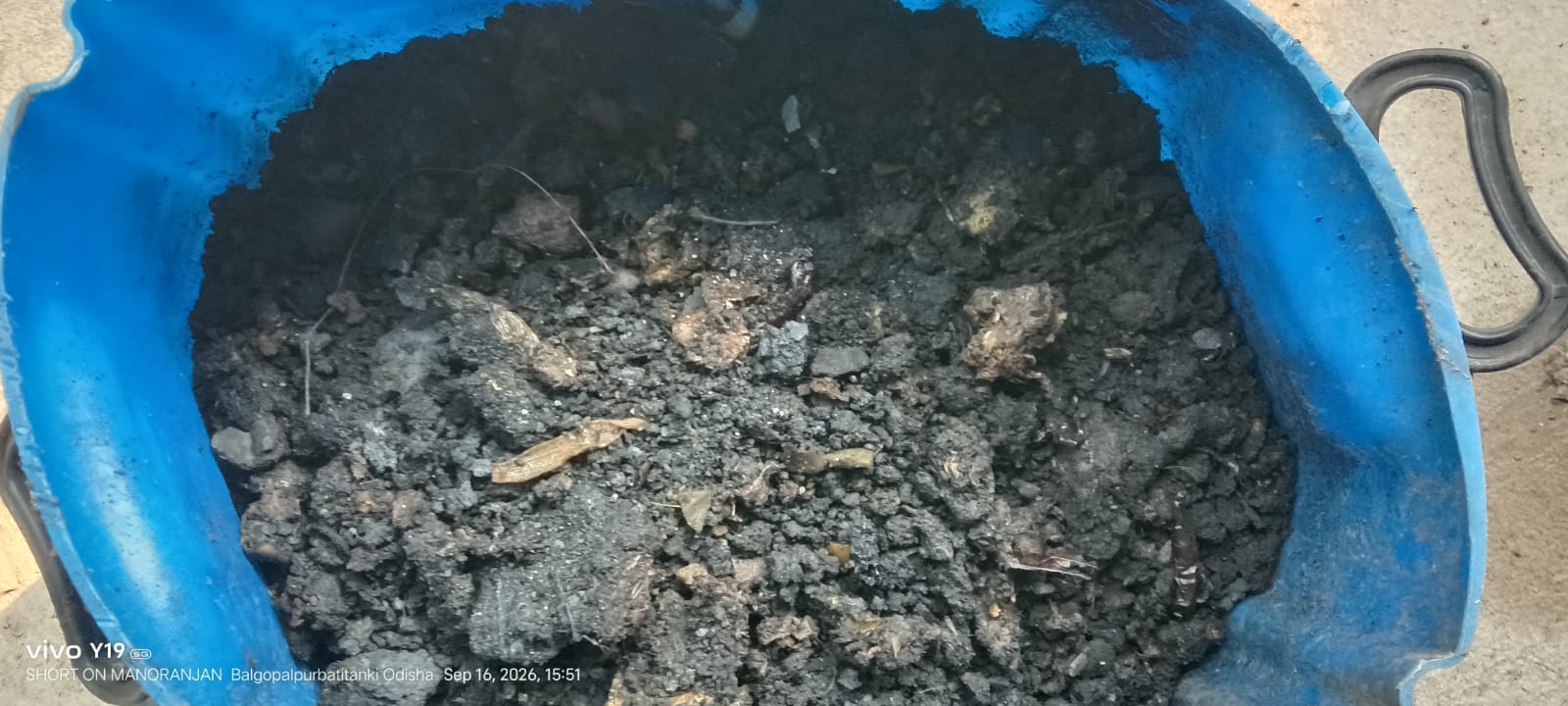
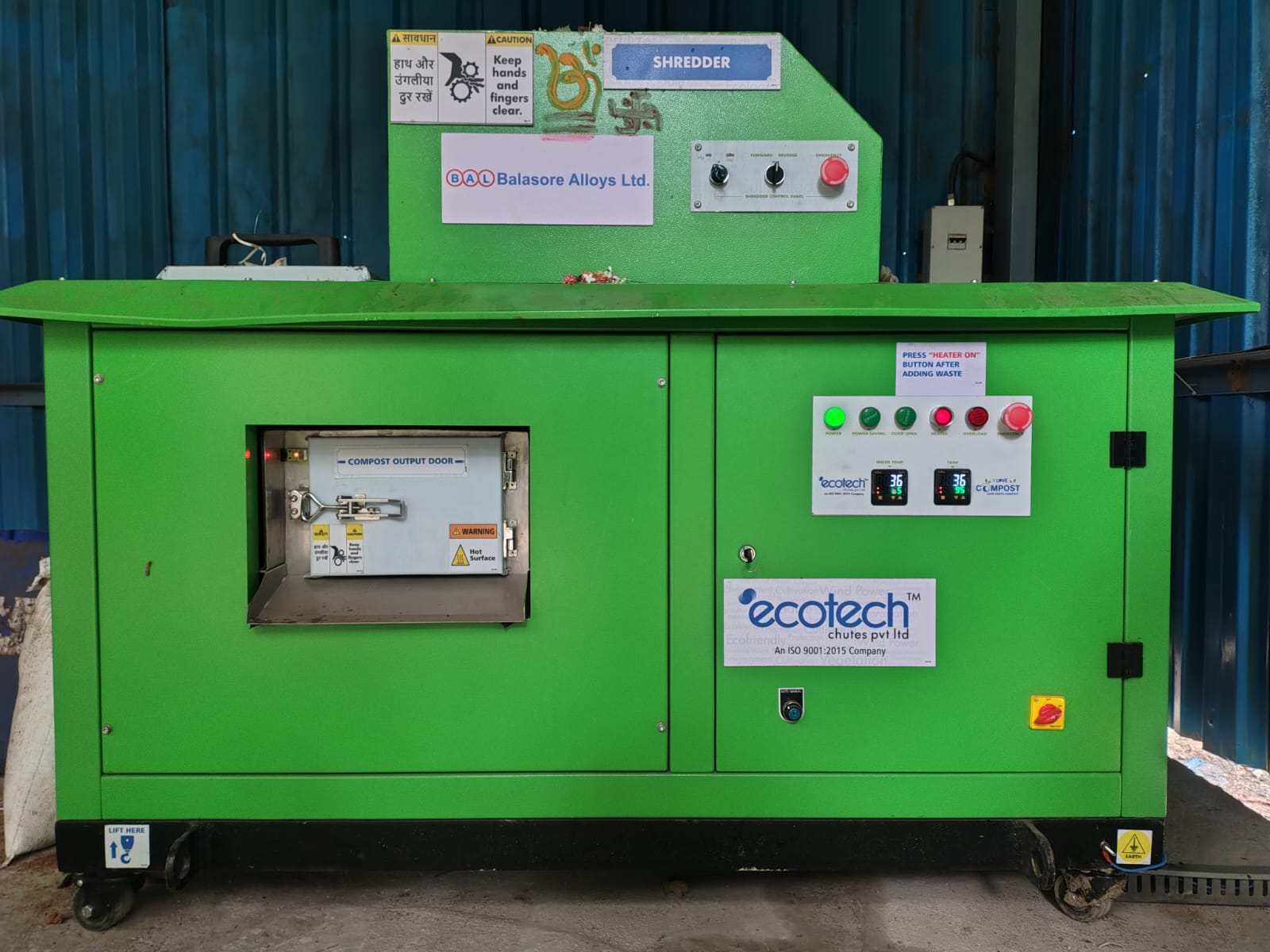
Balasore Alloys Limited has installed an organic waste composter at its Balasore Plant as part of its ongoing commitment to responsible waste management and environmental stewardship.
The machine processes food waste and fallen leaves generated at the plant and converts them into nutrient-rich organic compost. Instead of being discarded, this waste is turned into a useful resource that goes straight back into the plant’s horticulture gardens, enriching the soil naturally and reducing the need for external inputs.
By closing the loop between waste and resource, the composter supports sustainable practices at the Balasore Plant and reflects Balasore Alloys’ wider focus on environmental responsibility.
What began as a novel conservation initiative has matured into a paradigmatic blueprint — systematically transitioning operations from HSD dependence toward electrified mining systems, while unlocking measurable carbon credits and reinforcing BAL’s long-term decarbonisation roadmap. The management remains fully committed to achieving and maintaining compliance with all prescribed environmental norms and to continuously improving the environmental performance of the Kaliapani Chromite Mines.

 web development india